Industrial Protective Cases
The shell takes the hit; the interior does the protecting. We specify case construction, sealing and hardware against your handling environment — then fit a custom interior engineered for your equipment.
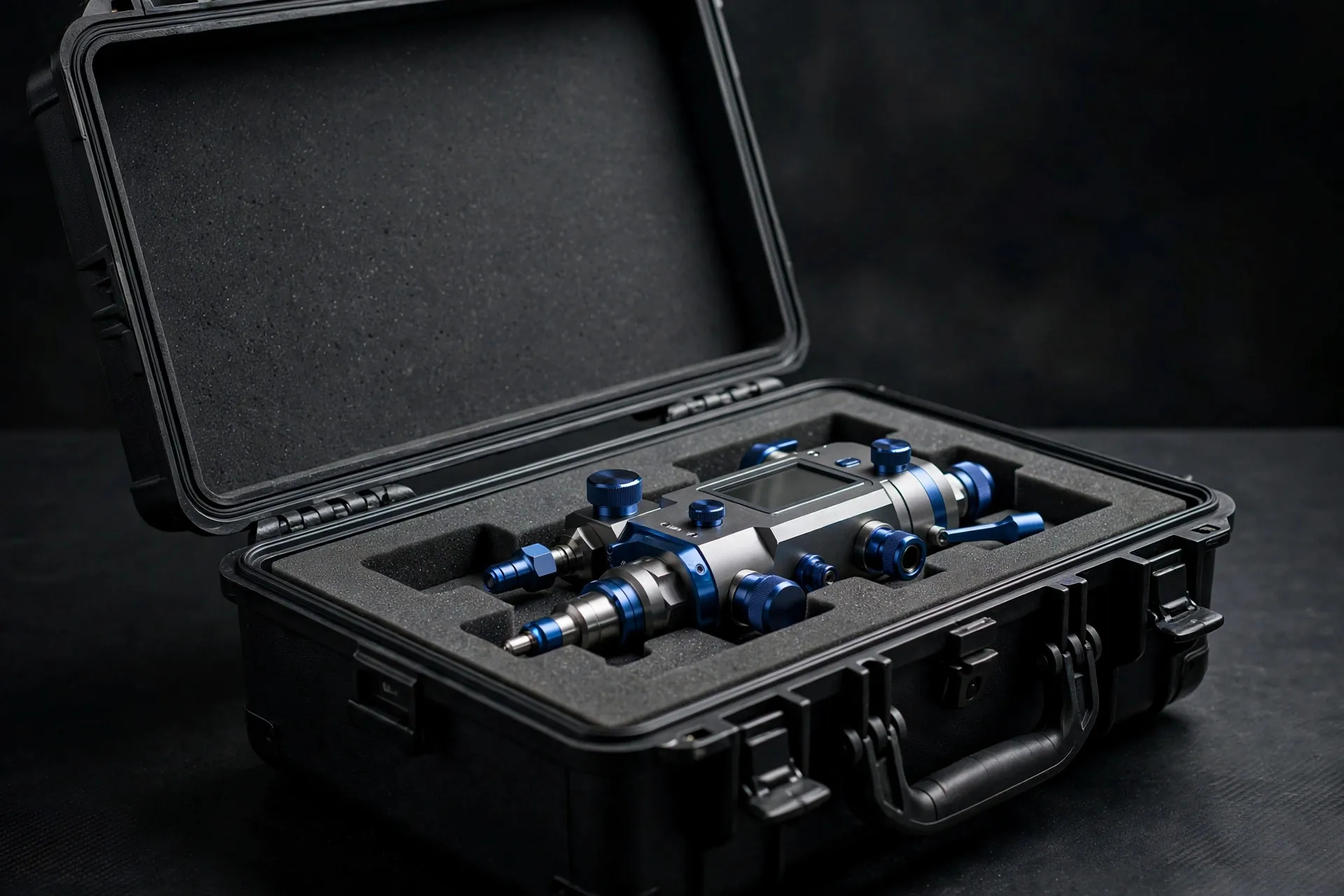
Three shell constructions, chosen by duty
- Rotomoulded (LLDPE) — seamless, thick-walled shells for the harshest handling: site work, freight and repeated drops.
- Injection-moulded (PP) — lighter, precise cases for instruments and kits carried by hand, with gasket-sealed options.
- Aluminium — rigid, professional presentation cases where heat tolerance, screening or a metal finish matters.
Every shell is paired with a custom EVA insert designed for the contents — a case is only as protective as the interior fitted inside it.
Specified, not standard
Latches & locking
Draw latches, butterfly latches on larger cases, padlock hasps and TSA-style lock options for air travel.
Wheels & handles
Telescopic handles, edge wheels, spring-loaded carry handles and stacking features for multi-case kits.
Sealing & venting
Gasket seals against dust and water ingress; pressure-equalisation valves for air freight and altitude changes.
Panels & branding
Connector and interface panels, lid organisers, document pouches, screen printing and laser-etched nameplates.
What we confirm with you
| Contents | Equipment list with dimensions and weights — determines internal layout and case size |
|---|---|
| Environment | Indoor / outdoor / site use; dust, rain, wash-down or immersion exposure |
| Transport | Hand-carry, vehicle, courier or air freight; stacking and pallet patterns |
| Shell | Rotomoulded LLDPE, injection-moulded PP, or aluminium — recommended per duty |
| Interior | Custom EVA insert, layered densities, lid foam profile, panel mounts |
| Compliance targets | Ingress or drop-test targets can be specified per project and verified with the selected case series before order |
Where a project requires a certified rating (for example a specific IP or military test standard), we confirm the rating of the exact case series in writing during quotation — ratings are model-specific and are never assumed.
Typical applications
Equipment OEMs shipping finished units with their accessories; robotics controllers and arm kits that travel between integrators and sites; calibration and test instrument kits; field-service and MRO technician kits; and medical and laboratory devices that need a sealed, fitted case. See Industries Served for the full picture.
Frequently asked questions
How do I choose between rotomoulded, injection-moulded and aluminium cases?
By duty. Rotomoulded LLDPE shells suit the harshest handling — site work, freight and repeated drops. Injection-moulded PP is lighter and more precise for hand-carried instruments and kits, with gasket-sealed options. Aluminium suits presentation cases where heat tolerance, screening or a metal finish matters. We recommend the construction against your handling environment.
Is the foam interior included and customised?
Yes. Every shell is paired with a custom EVA foam insert designed for the contents — a case is only as protective as the interior fitted inside it. Shell, interior and hardware are specified and quoted as one package.
Can you supply a case with a certified IP or military rating?
Ingress and drop-test targets can be specified per project, but ratings are model-specific: we confirm the rating of the exact case series in writing during quotation. Ratings are never assumed or transferred between models.
What information do you need to quote a protective case?
An equipment list with dimensions and weights, the use environment (indoor, outdoor, site; dust, rain or wash-down exposure), and how the case will travel — hand-carry, vehicle, courier or air freight.
How does a protective case project run?
Every project runs through our six-step process — brief and drawings, engineering proposal, prototype, approval, production, then QC and dispatch. For drawing-based RFQs, the engineering proposal and itemised quotation are prepared after an engineering review of the drawings.
Tell us what goes inside.
An equipment list with dimensions is enough to start. We recommend the shell, interior and hardware as one specified package.